
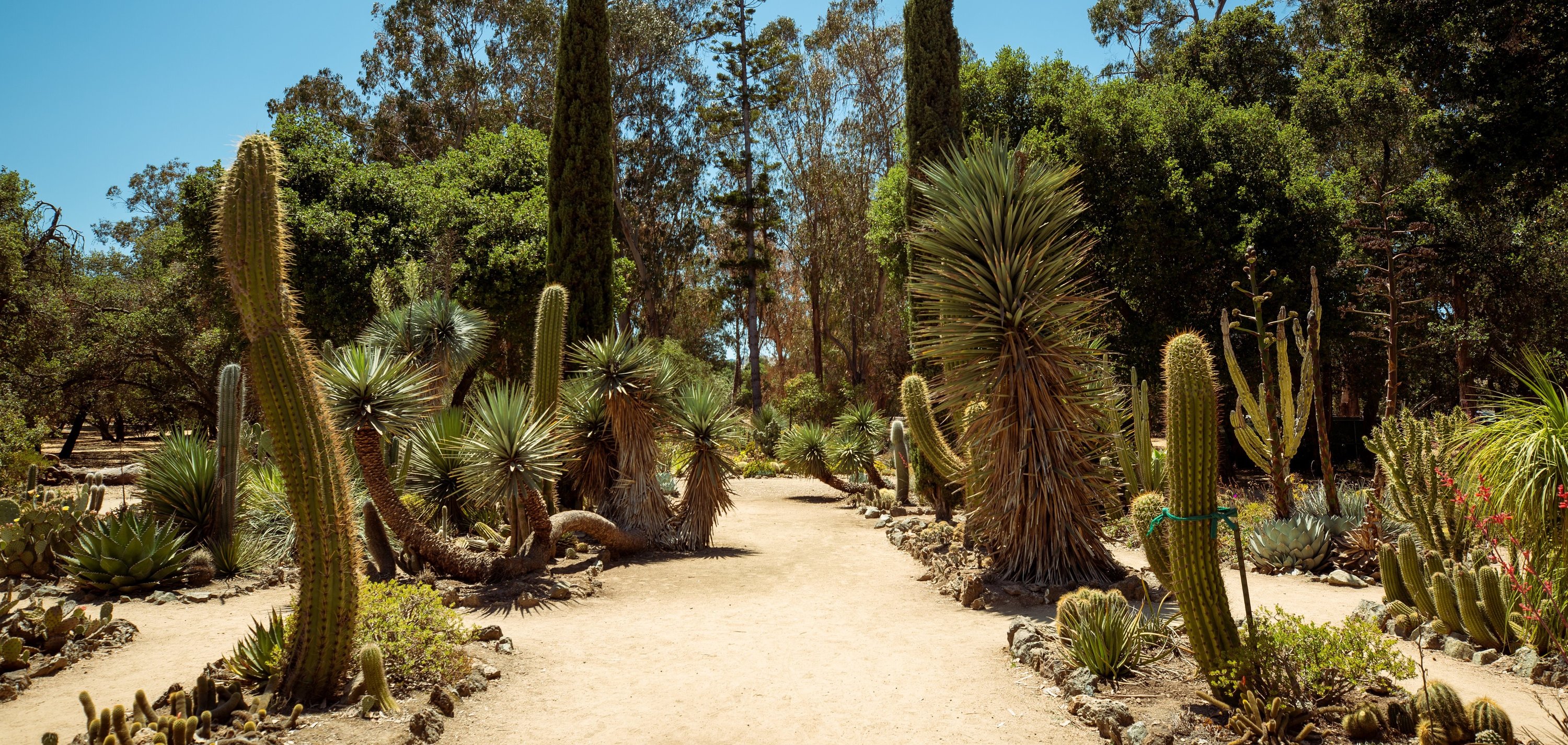
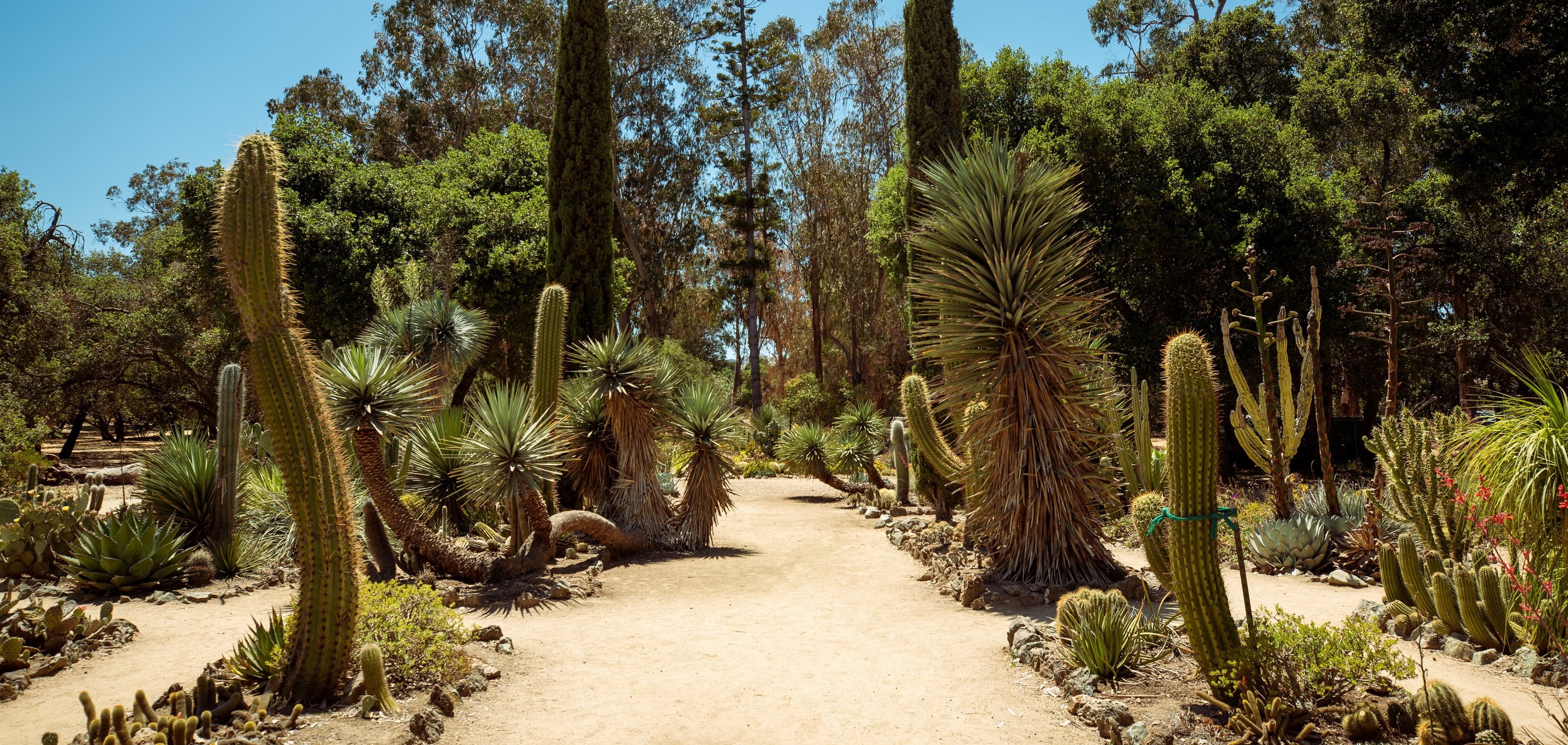
The Arizona Garden—often called the Arizona Cactus Garden—is one of Stanford University’s oldest and most distinctive landscapes. Planted between 1880 and 1883 for Jane and Leland Stanford and designed by landscape architect Rudolf Ulrich, the garden was originally part of the Stanford family estate. Its elegant oval layout, sandy paths, and carefully arranged beds highlight an extraordinary collection of cacti, agaves, aloes, and other drought-tolerant plants from around the world. In a region better known for redwoods and coastal vegetation, the garden stands out as a bold and unexpected tribute to desert beauty .
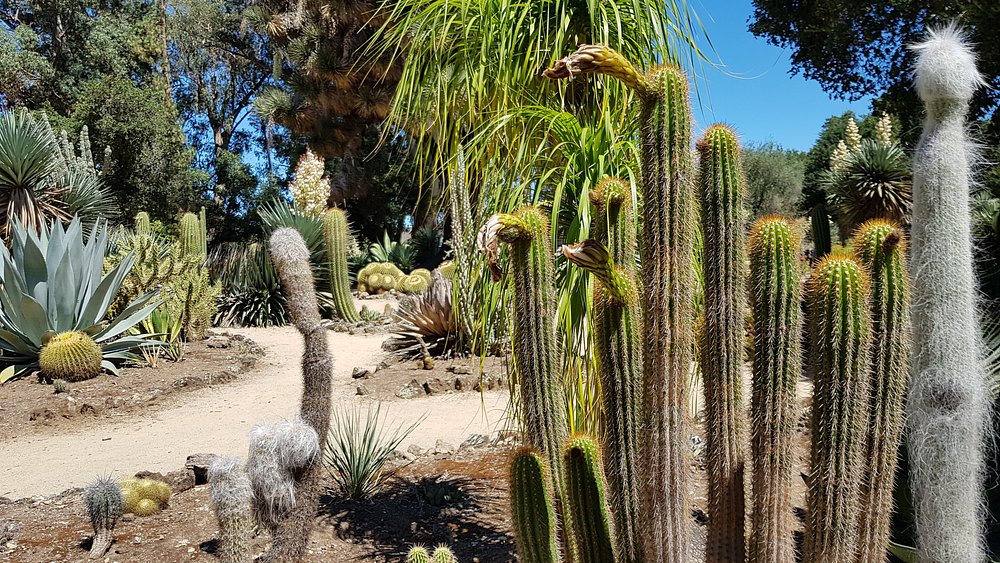
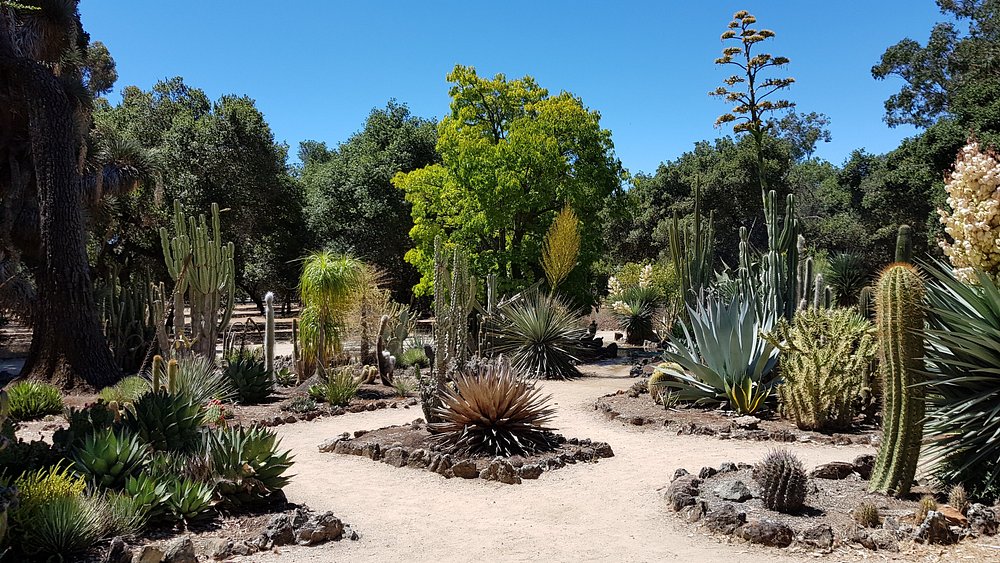
Located just south of the Stanford Family Mausoleum, the garden sits beside the resting place of Leland Stanford Jr.—the founders’ only child—and his parents. The nearby Angel of Grief memorial adds to the reflective atmosphere of the site. This proximity gives the garden a deeper meaning: it is not merely decorative, but part of a broader historical and emotional landscape connected to the founding of Stanford University itself.
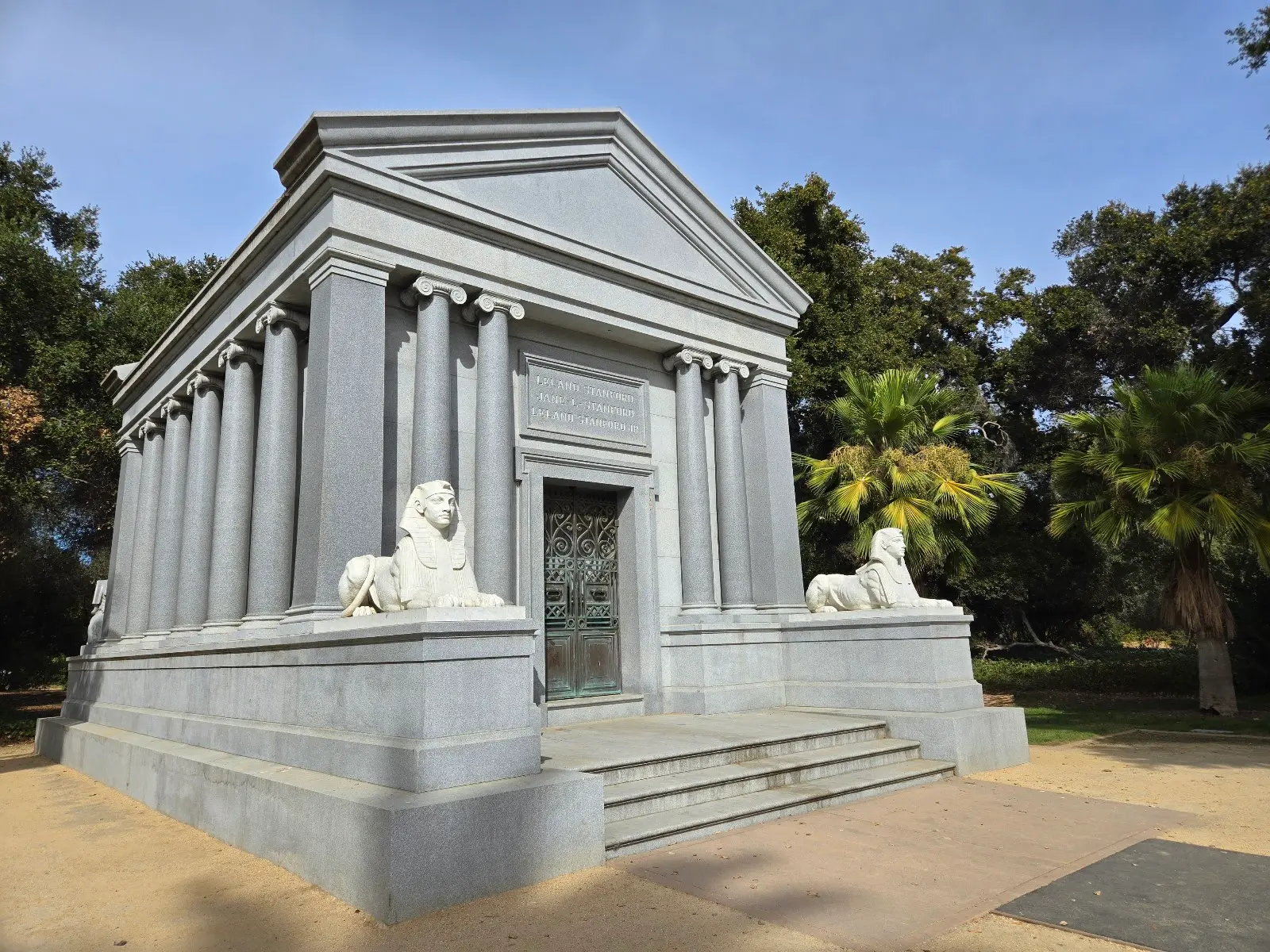
Over the decades, the Arizona Garden has experienced cycles of decline and renewal. By the mid-20th century, it had fallen into serious neglect, with many original plantings lost and the structure of the beds obscured. Restoration efforts beginning in the late 1990s helped revive the garden’s historic character and reestablish its plant collection. However, as a living landscape composed largely of slow-growing succulents and vulnerable desert species, the garden requires constant, knowledgeable maintenance to preserve both its health and its design integrity.
In recent years, visitors have noticed that parts of the garden appear stressed or less orderly than in peak restoration periods. Desert plants are resilient, but they are not maintenance-free. Ground pests, climate variability, soil conditions, and limited staffing or volunteer resources can gradually affect plant vitality and the clarity of the formal layout. Without attentive pruning, replanting, pest control, and irrigation management, the garden can slowly lose the crisp geometry and sculptural drama that define its original vision.
Maintaining the Arizona Garden is therefore not just a matter of aesthetics—it is a matter of stewardship. As one of Stanford’s oldest surviving landscape features, it represents Victorian-era horticultural ambition, family legacy, and campus heritage. Keeping it vibrant and carefully tended ensures that future students, visitors, and scholars can continue to experience this quiet desert oasis exactly as it was meant to be: structured, striking, and thoughtfully preserved within the heart of Stanford.
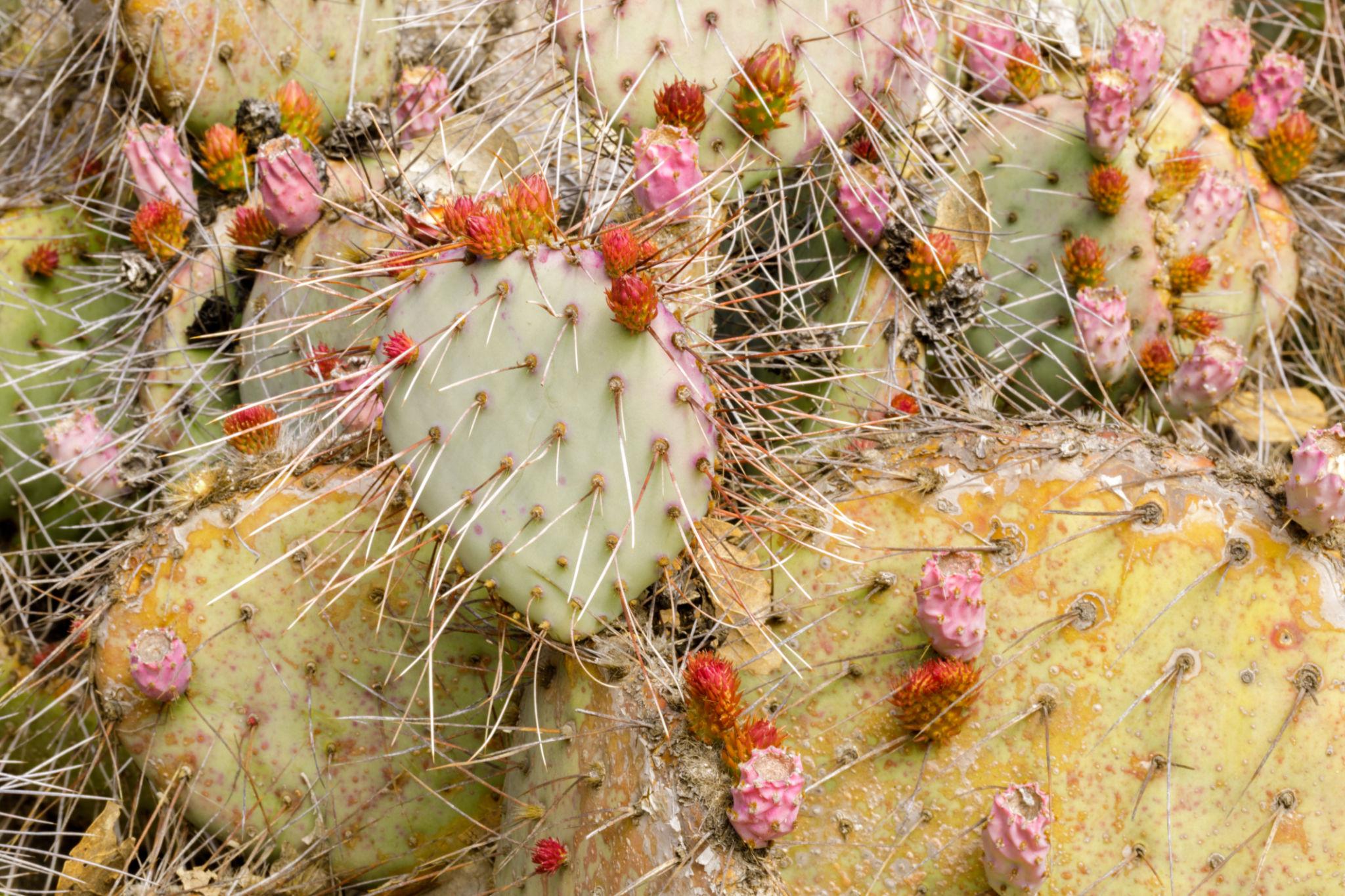
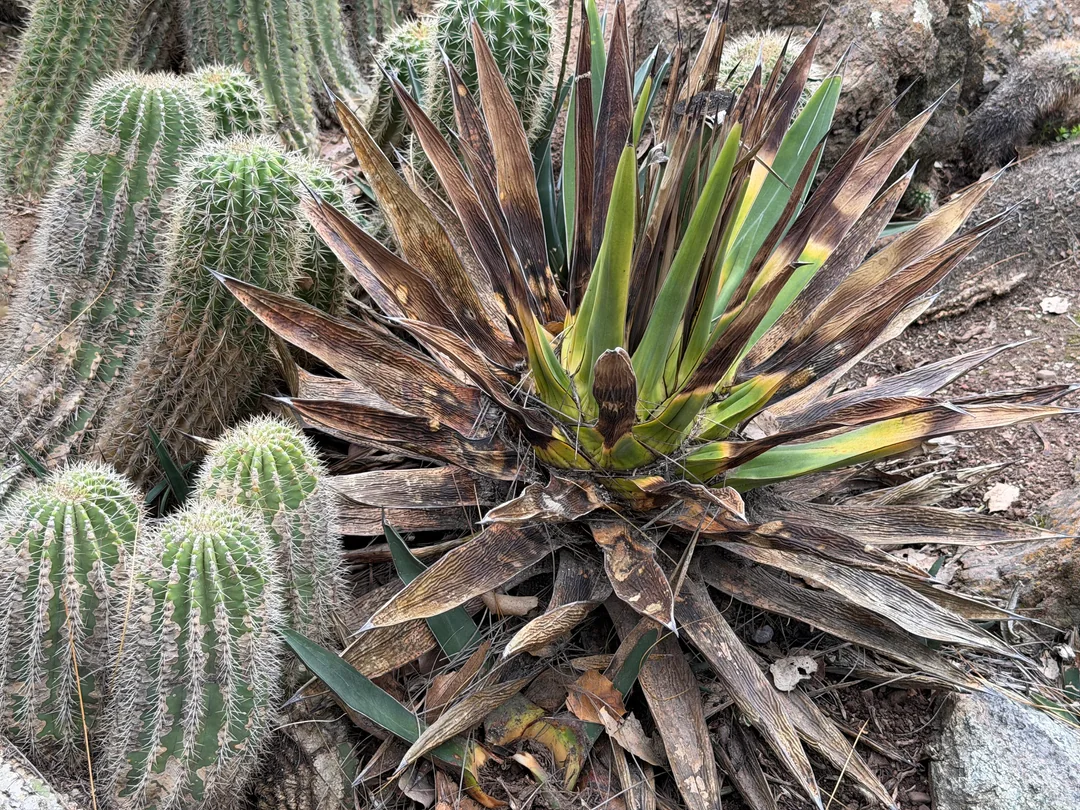
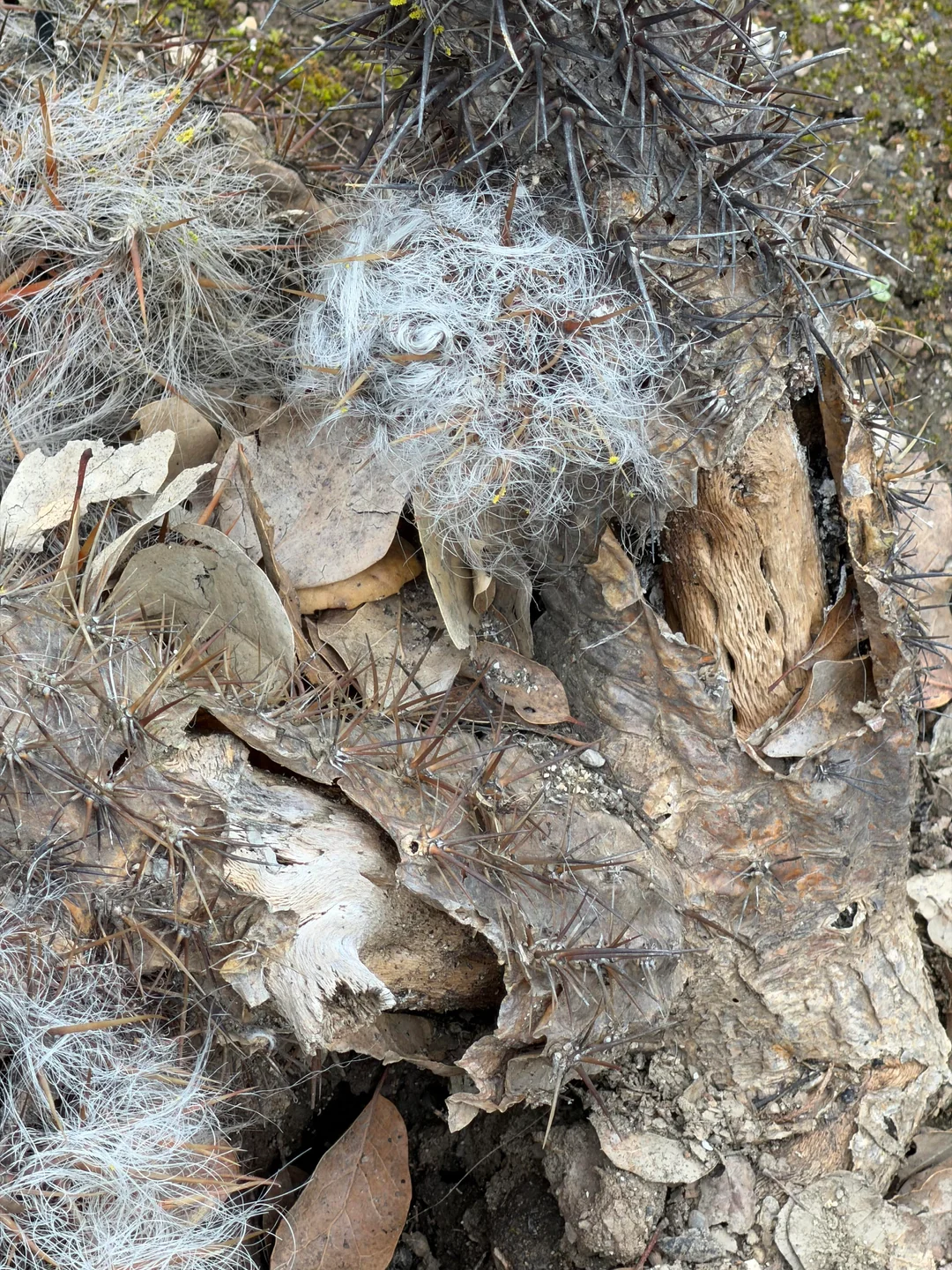
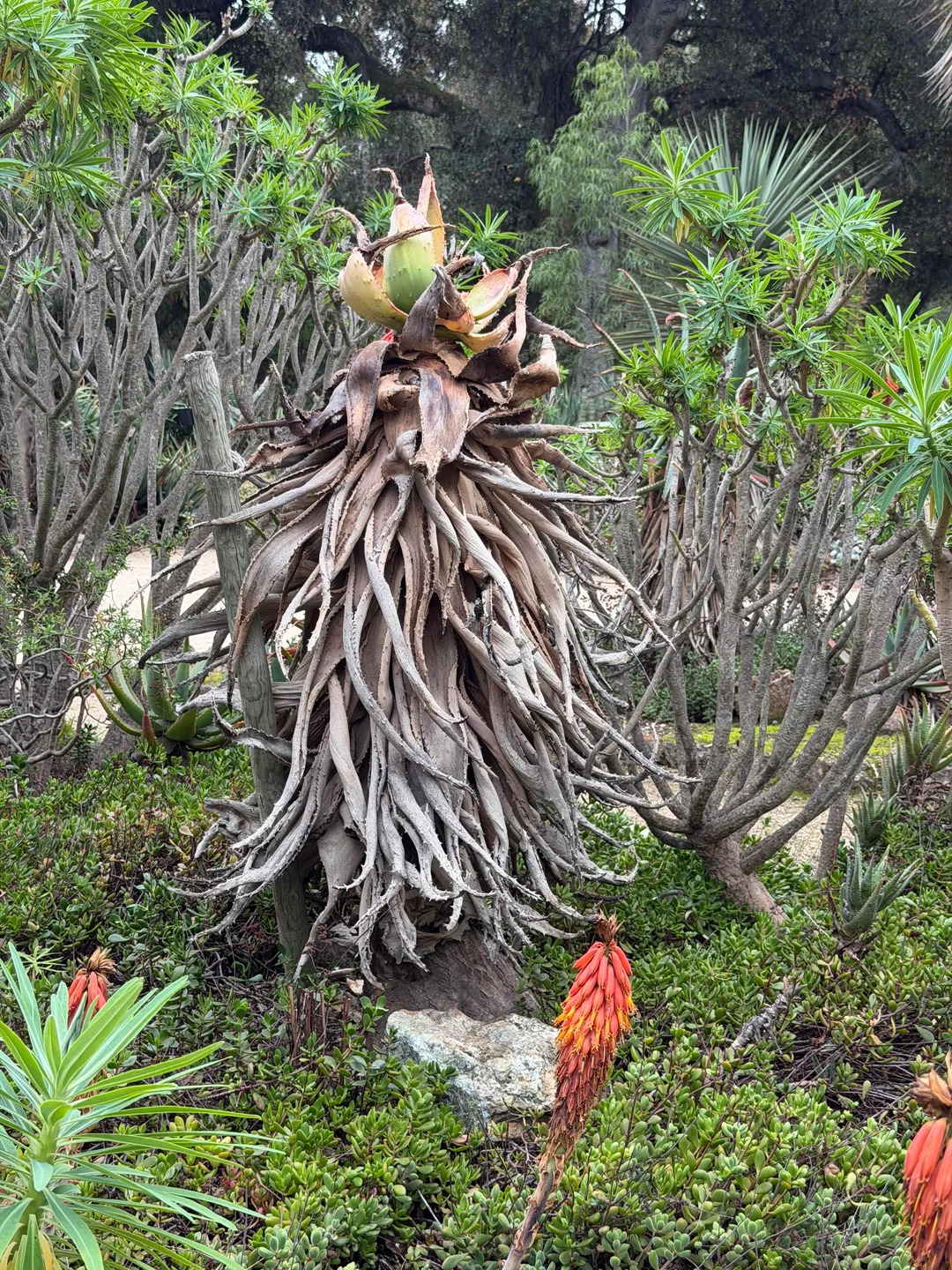
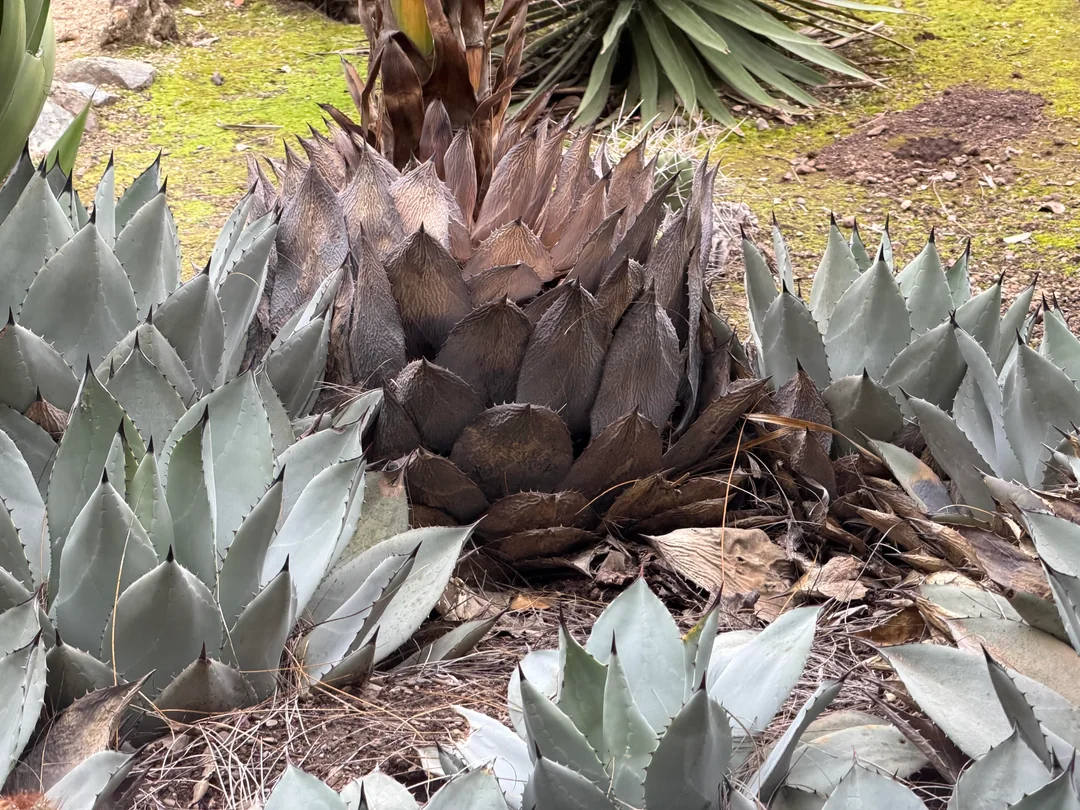
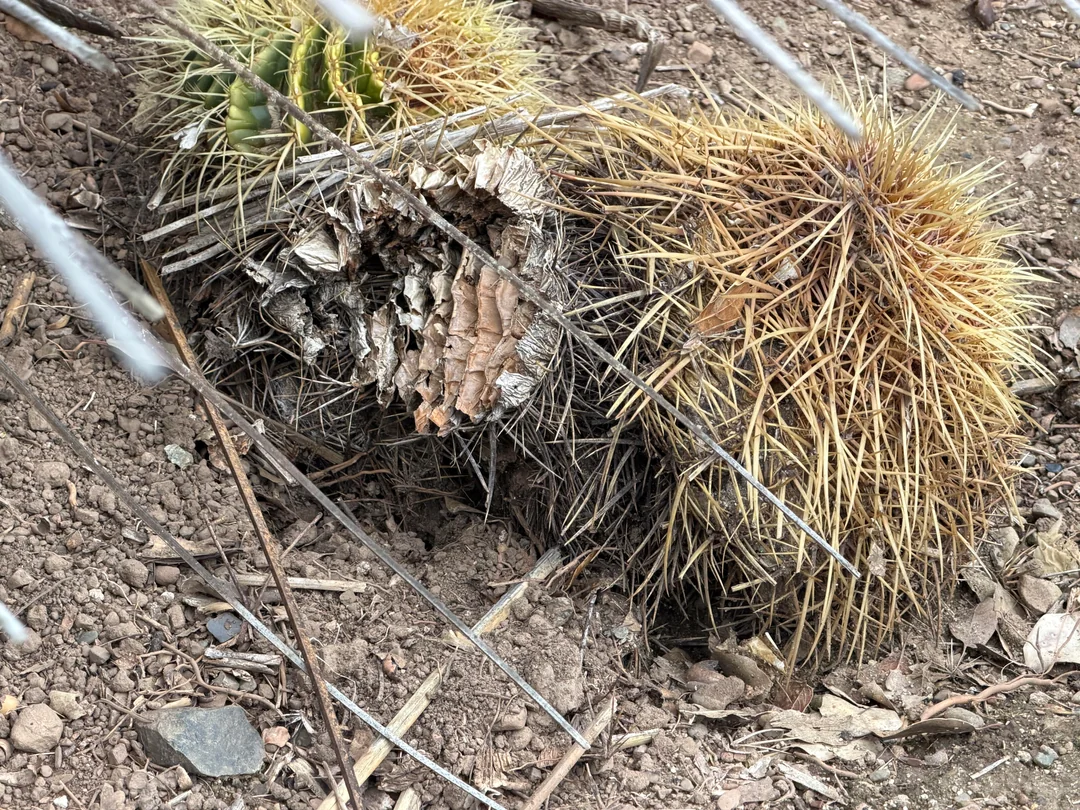
One of the best times to visit the Arizona Garden is during spring (March through May), when many succulents and cacti begin blooming and the garden feels especially vibrant. Early summer can also be beautiful, as the warm weather highlights the dramatic silhouettes of agaves and columnar cacti against clear blue skies. While the garden can be visited year-round, late winter rains or extreme summer heat may leave certain plants stressed. Visiting in the morning or late afternoon provides softer light for photography and a quieter, more contemplative experience.
Because the garden sits slightly tucked away, some visitors miss it on their first trip to campus. It is located between Campus Drive and Arboretum Road, just south of the Stanford Family Mausoleum. You can easily find it using Stanford’s official campus map:
Stanford Arizona Garden Location
Simply search for “Arizona Garden” or “Arizona Cactus Garden” in the map search bar.
As one of the university’s oldest landscape features, the Arizona Garden requires careful and consistent maintenance to preserve its historic layout and plant health. In recent years, natural wear, pest activity, and climate variability have made attentive stewardship even more important. Desert plants are resilient, but without thoughtful pruning, soil management, and replanting, the formal geometry of the garden can slowly lose its clarity. Supporting ongoing preservation efforts ensures that this quiet oasis remains vibrant, structured, and meaningful for future generations of Stanford students and visitors.
Helpful websites
- Stanford Facilities Operations (location + historical notes): https://facops.stanford.edu/arizona-garden
- Stanford Report (background + restoration-era context): https://news.stanford.edu/stories/2003/01/sun-shines-century-old-cactus-garden
- Stanford Spotlight Exhibit (curated history/interpretation): https://exhibits.stanford.edu/arizonagarden
- Stanford Magazine (context on why it mattered culturally/financially): https://stanfordmag.org/contents/point-of-pride
- Wikipedia overview (quick facts + references list): https://en.wikipedia.org/wiki/Arizona_Cactus_Garden