

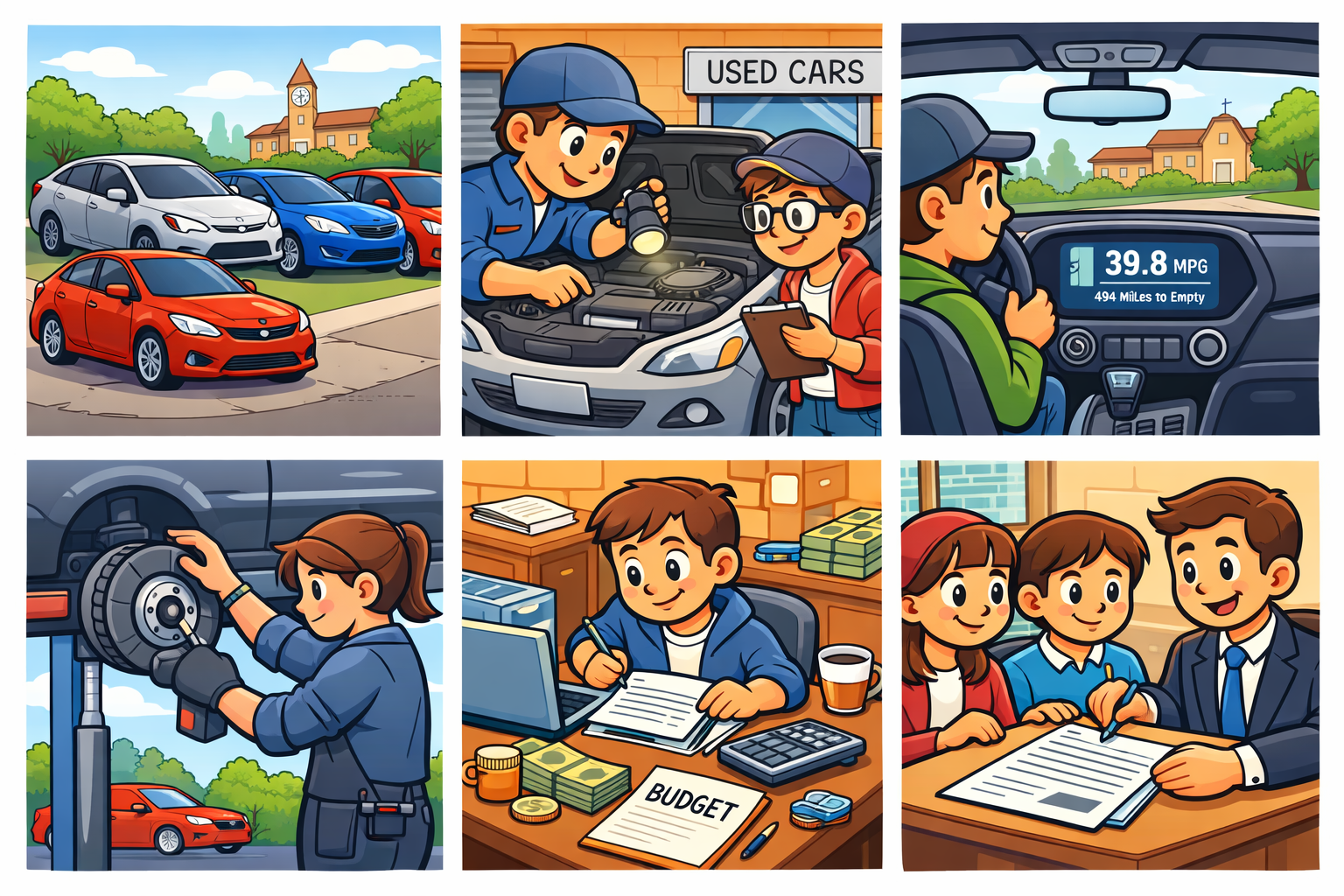
🚗 The Most Suitable Car for a Student: A Comprehensive, Data-Driven Analysis
1️⃣ The Student Transportation Equation
Choosing a car as a student is not simply a lifestyle decision—it is a capital allocation decision. Tuition, housing, books, and living expenses already strain cash flow. A vehicle must therefore optimize total cost of ownership (TCO), reliability, safety, and resale value while minimizing financial risk. The objective is not to buy the “best” car—but the most economically efficient one over a 4–6 year academic horizon.
2️⃣ Understanding Total Cost of Ownership (TCO)
TCO includes:
- Purchase price
- Depreciation
- Insurance
- Fuel
- Maintenance & repairs
- Registration & taxes
- Financing costs
For students, depreciation and insurance often outweigh fuel savings. Therefore, evaluating TCO rather than sticker price is essential.
3️⃣ Depreciation: The Largest Hidden Expense
New vehicles lose approximately 20–30% of value in year one and about 50–60% within five years. A $26,000 new compact may lose $13,000 in five years. By contrast, a 5-year-old used car has already absorbed the steepest depreciation and may only lose 15–25% over the next five years.
For students planning to sell after graduation, minimizing depreciation protects liquidity.
4️⃣ New vs. Used Cost Comparison
| Cost Factor (5 Years) | New Compact Sedan | 5-Year-Old Used Sedan |
|---|---|---|
| Purchase Price | $25,000 | $12,000 |
| Estimated Depreciation | $13,000 | $3,000 |
| Insurance (avg) | $9,000 | $6,000 |
| Fuel (30 MPG avg) | $8,000 | $8,000 |
| Maintenance | $2,500 | $4,000 |
| Total 5-Year Cost | ~$32,500 | ~$21,000 |
Conclusion: Used vehicles typically save students $10,000+ over five years.
5️⃣ Lifespan Expectations
Modern compact vehicles from reputable manufacturers commonly last:
| Brand | Typical Lifespan (Miles) | Years (Avg Use) |
|---|---|---|
| Toyota | 200,000–300,000 | 15–20 years |
| Honda | 200,000–250,000 | 15+ years |
| Mazda | 180,000–220,000 | 12–15 years |
A 6-year-old car with 60,000 miles may realistically provide another 8–12 years of service with proper maintenance.
6️⃣ Reliability Leaders for Students
Models consistently recognized for durability include:
- Toyota Corolla
- Honda Civic
- Mazda3
- Toyota Prius
These vehicles offer:
- Proven engines
- Affordable parts
- Strong resale value
- Wide mechanic familiarity
7️⃣ Maintenance Costs Over Time
Maintenance increases gradually with age. Typical annual maintenance estimates:
| Vehicle Age | Avg Annual Maintenance |
|---|---|
| 0–3 years | $300–$500 |
| 4–7 years | $500–$800 |
| 8–12 years | $800–$1,200 |
Reliable compact sedans remain significantly cheaper to maintain than SUVs or luxury vehicles.
8️⃣ Common Major Repairs and Costs
| Repair Item | Estimated Cost |
|---|---|
| Brake Replacement | $300–$800 |
| Battery | $150–$250 |
| Transmission Repair | $2,000–$4,000 |
| Hybrid Battery (if needed) | $2,000–$3,000 |
Hybrid battery replacements are less common than often assumed, particularly within 10–12 years of ownership.
9️⃣ Fuel Efficiency Impact
Fuel efficiency dramatically affects student budgets.
| MPG | Annual Fuel Cost (12,000 miles @ $4/gallon) |
|---|---|
| 20 MPG | $2,400 |
| 30 MPG | $1,600 |
| 50 MPG | $960 |
Hybrid vehicles such as the Toyota Prius can save $600–$1,400 per year versus less efficient vehicles.
🔟 Insurance Considerations
Drivers under 25 face elevated insurance rates. Compact sedans typically cost less to insure than SUVs or sports cars.
| Vehicle Type | Monthly Insurance (Young Driver Avg) |
|---|---|
| Compact Sedan | $100–$160 |
| Hybrid Sedan | $110–$170 |
| SUV | $160–$250 |
| Sports Car | $250+ |
Choosing a modest vehicle significantly reduces insurance premiums.
1️⃣1️⃣ Financing and Debt Strategy
Students often already carry loans at 4–8% APR. Financing a new car adds additional leverage risk.
Financial best practice:
- Keep car payment <15% of monthly income
- Avoid loans longer than 60 months
- Prioritize low-interest credit union financing
Cash purchases of reliable used cars remain the safest strategy.
1️⃣2️⃣ Hybrid vs Gasoline Comparison
| Factor | Gas Compact | Hybrid Compact |
|---|---|---|
| Purchase Price | Lower | Slightly Higher |
| Fuel Economy | 28–35 MPG | 45–55 MPG |
| Maintenance | Lower | Slightly Higher |
| Resale Value | Strong | Very Strong |
| Ideal For | Short commutes | Long daily drives |
Hybrids make financial sense for students driving more than 15,000 miles annually.
1️⃣3️⃣ Safety and Technology
Modern vehicles (2016+) include:
- Backup cameras
- Stability control
- Advanced airbags
Safety should not be sacrificed for cost; selecting a 5–8-year-old vehicle balances affordability with modern safety features.
1️⃣4️⃣ The SUV Temptation
Compact SUVs offer space but cost more in:
- Fuel
- Insurance
- Tire replacement
- Initial purchase price
For most students, compact sedans provide adequate cargo capacity at significantly lower cost.
1️⃣5️⃣ Electric Vehicles (EVs) for Students
EVs reduce fuel and maintenance costs but require:
- Reliable charging access
- Higher upfront cost
For students living in apartments without charging infrastructure, EV ownership may be impractical.
1️⃣6️⃣ Cost Projection Over 4-Year Degree
| Category | Used Sedan | New Sedan |
|---|---|---|
| Purchase + Depreciation | $4,000 | $10,000 |
| Fuel | $6,400 | $6,400 |
| Insurance | $5,000 | $7,000 |
| Maintenance | $2,800 | $1,500 |
| Total 4-Year Cost | ~$18,200 | ~$24,900 |
Used vehicles offer clear financial advantage.
1️⃣7️⃣ Resale Flexibility
Used cars retain value proportionally better during ownership. Selling after graduation becomes easier, especially for high-demand models like the Toyota Corolla.
1️⃣8️⃣ Optimal Vehicle Age
Data suggests the financial “sweet spot” is:
- 4–7 years old
- 40,000–80,000 miles
- Clean service history
This age range balances depreciation savings with remaining lifespan.
1️⃣9️⃣ Risk Mitigation Strategy
Students should:
- Obtain a pre-purchase inspection
- Check service records
- Avoid rebuilt/salvage titles
- Budget for emergency repairs
A $1,000 emergency fund for vehicle repairs is advisable.
Final Recommendation: Choose Reputation, Proven Lifespan, and Remaining Utility
The most financially intelligent strategy for students is not to chase the newest model, but to maximize remaining lifespan per dollar spent. Vehicle selection should be guided primarily by brand reputation, durability data, and historical reliability, not aesthetics or short-term trends.
Modern vehicles from manufacturers such as Toyota and Honda routinely exceed 200,000–300,000 miles with proper maintenance. In fact, long-term fleet and consumer studies consistently show that well-maintained Japanese sedans frequently surpass the 250,000-mile threshold, making this a practical and realistic target for buyers seeking longevity.
🎯 Target Strategy: 250,000 Miles or More
A financially disciplined student should:
- Target vehicles with a documented lifespan of 250,000 miles or higher
- Purchase at 30–50% of total expected lifespan consumed
- Retain significant remaining usable life
For example:
| Metric | Example Scenario |
|---|---|
| Original MSRP | $60,000 |
| Current Age | 10 years |
| Current Mileage | 120,000 miles |
| Purchase Price | $3,000–$10,000 |
| Expected Lifespan | 250,000+ miles |
| Remaining Potential | 130,000+ miles |
In this scenario, the student is purchasing a vehicle that has already absorbed the majority of its depreciation, yet still retains over half of its usable lifespan.
This dramatically lowers cost per remaining mile.
📊 Cost Per Remaining Mile Analysis
| Purchase Price | Remaining Miles | Cost per Remaining Mile |
|---|---|---|
| $5,000 | 130,000 | $0.038/mile |
| $8,000 | 130,000 | $0.061/mile |
| $10,000 | 130,000 | $0.076/mile |
Even after allocating an additional $3,000–$4,000 for future maintenance, the long-term economics remain favorable compared to financing a new vehicle with rapid depreciation.
🏆 Why Reputation Matters More Than Age
Age alone is not the primary risk factor — maintenance history and brand durability are more important.
A well-maintained 10-year-old vehicle from a high-reliability brand may be safer and more dependable than a poorly maintained 5-year-old vehicle from a lower-reliability manufacturer.
Models such as:
- Toyota Camry
- Honda Accord
- Toyota Corolla
- Honda Civic
are widely recognized for exceeding 200,000 miles with routine servicing.
📈 Depreciation Advantage of Higher MSRP Used Cars
An interesting opportunity exists when purchasing previously high-MSRP vehicles at a steep discount.
A car that originally sold for $60,000 may cost only $6,000–$10,000 after 10 years. If the platform and engine are known for durability, the buyer gains:
- Higher build quality
- Better safety engineering
- Premium materials
- Reduced depreciation risk
Because the first owner absorbed most of the financial loss.
However, students must ensure:
- Parts availability is affordable
- Insurance remains reasonable
- Maintenance complexity is manageable
💡 The Rational Student Formula
Choose based on:
- Brand reliability history
- Documented lifespan potential (250K+ miles target)
- Verified maintenance records
- Low depreciation stage
- Affordable insurance classification
Avoid choosing based on:
- Luxury image
- Emotional appeal
- High monthly payments
🔒 Final Conclusion
The optimal student vehicle is one that:
- Has already experienced most of its depreciation
- Retains more than half of its mechanical lifespan
- Comes from a brand with proven durability
- Minimizes debt and insurance burden
A carefully selected 8–12 year-old vehicle priced between $3,000 and $10,000, with strong reliability history and 120,000 miles or less, can represent exceptional financial efficiency.
When evaluated rationally, transportation becomes an asset supporting education — not a liability that compromises it.
Below are official U.S. government resources that provide reliable, consumer-protection guidance for purchasing a car (new or used), financing, warranties, and avoiding scams.
🇺🇸 Federal Government Resources
1️⃣ Federal Trade Commission (FTC)
The FTC provides detailed guidance on buying, financing, and protecting yourself when purchasing a vehicle.
Buying a New Car
2️⃣ Consumer Financial Protection Bureau (CFPB)
CFPB focuses on auto loans and financing transparency.
Auto Loan Basics
Very useful for students considering financing.
3️⃣ National Highway Traffic Safety Administration (NHTSA)
For safety ratings, recalls, and VIN checks.
Check Vehicle Recalls
4️⃣ USA.gov
Official government portal summarizing consumer vehicle purchase guidance.
Vehicle Buying & Leasing Information
- https://www.usa.gov/motor-vehicle-services
- https://www.fueleconomy.gov/
- https://www.fueleconomy.gov/feg/Find.do?action=sbsSelect